My Professional Experience.
I create websites that are accessible, responsive, and easy to navigate. Every project focuses on clean, maintainable code and thoughtful design to provide smooth, reliable user experiences.
My portfolio highlights work across healthcare, research, museums, and charities. Each site is built to meet user needs, with clear layouts and intuitive functionality that adapt well to different devices and audiences.
Explore the projects below to see how I combine technical skills, user-centered design, and practical solutions in real world projects.
MindTech.
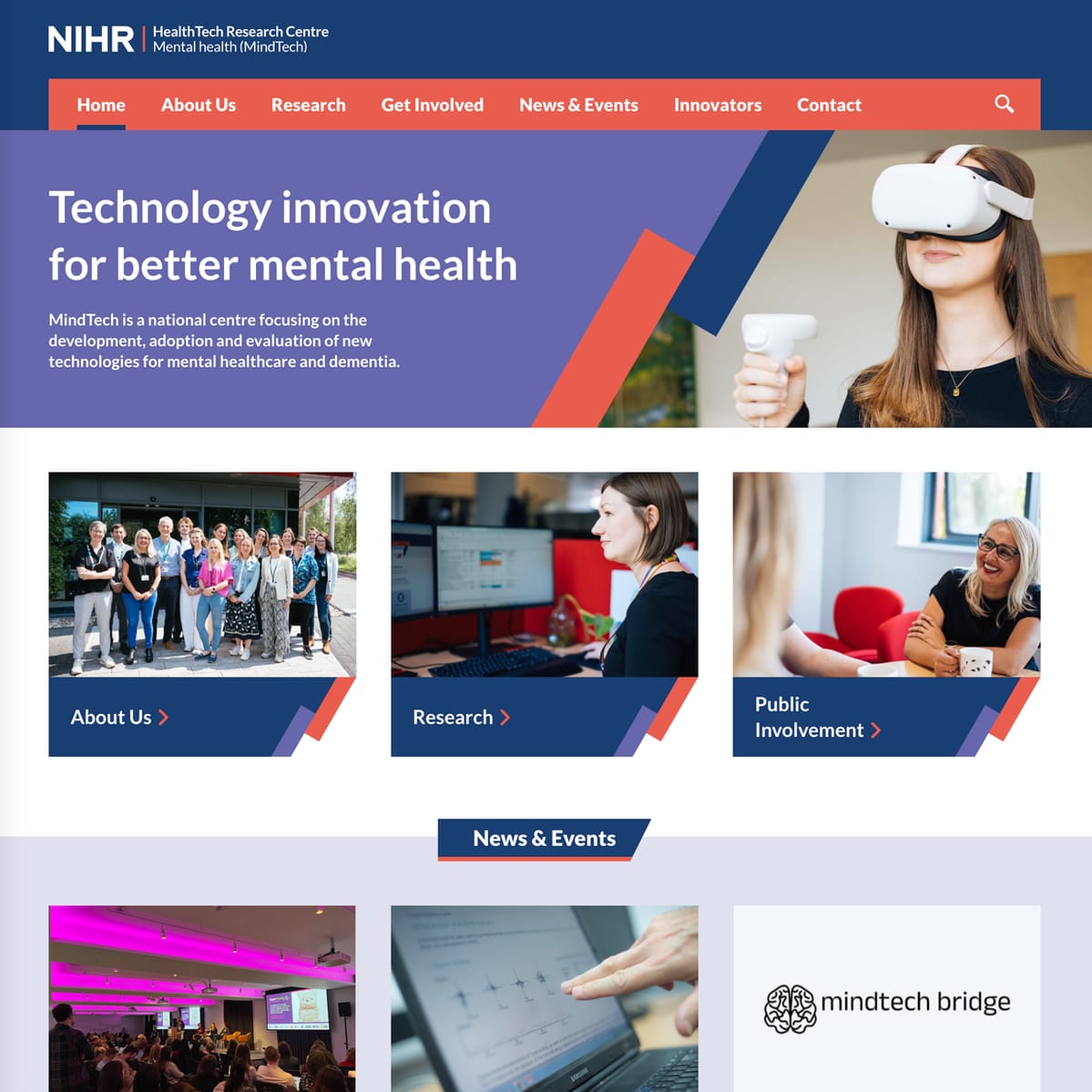
This project involved rebuilding the MindTech HRC website with a modern design, clearer structure, and a more flexible content management setup.
The goal was to create a site that better represents MindTech’s research, people, and partnerships while staying easy for the team to update and maintain.
Visit websiteKey features
- Redesigned pages to present research themes, projects, and publications more clearly
- Created a cleaner navigation system to help users explore information quickly
- Improved layouts for team profiles, news, and partner collaborations
- Strengthened accessibility, readability and mobile responsiveness
Tech & skills
- Building page templates and reusable components
- Setting up and configuring the CMS for flexible content editing
- Front-end development focused on accessibility, performance, and responsive design
- Optimising images, media and layout for speed and clarity
HRC for Rehab.
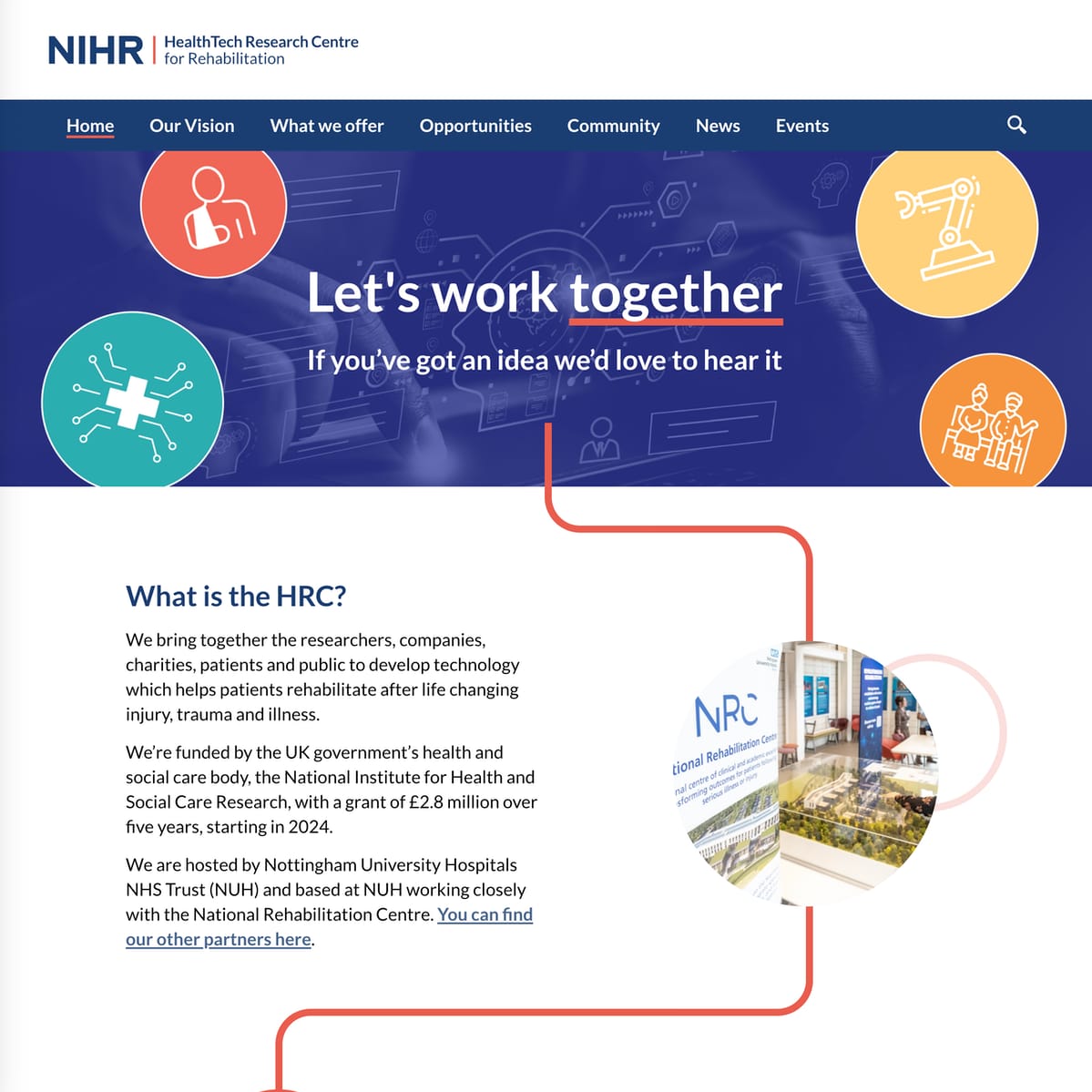
This project involved designing and building a new website for the NIHR HealthTech Research Centre for Rehabilitation.
The aim was to create a clear, accessible platform to introduce the new centre, showcase its research focus, and support engagement with clinicians, industry partners, and the public.
Visit websiteKey features
- Clear navigation to help users discover projects, partners and funding details
- Accessible, mobile-friendly layouts suitable for a broad audience
- Brand-aligned visual design communicating a modern and professional identity
Tech & skills
- Homepage timeline-style design built with a responsive line guiding users step by step through submitting an idea via the contact form
- Bootstrap for building responsive layouts and consistent components
- Custom templates and reusable page sections for flexible content growth
- CMS setup to allow team members to update content easily
- Accessibility best practices and performance optimisation
REMAP-ILD.
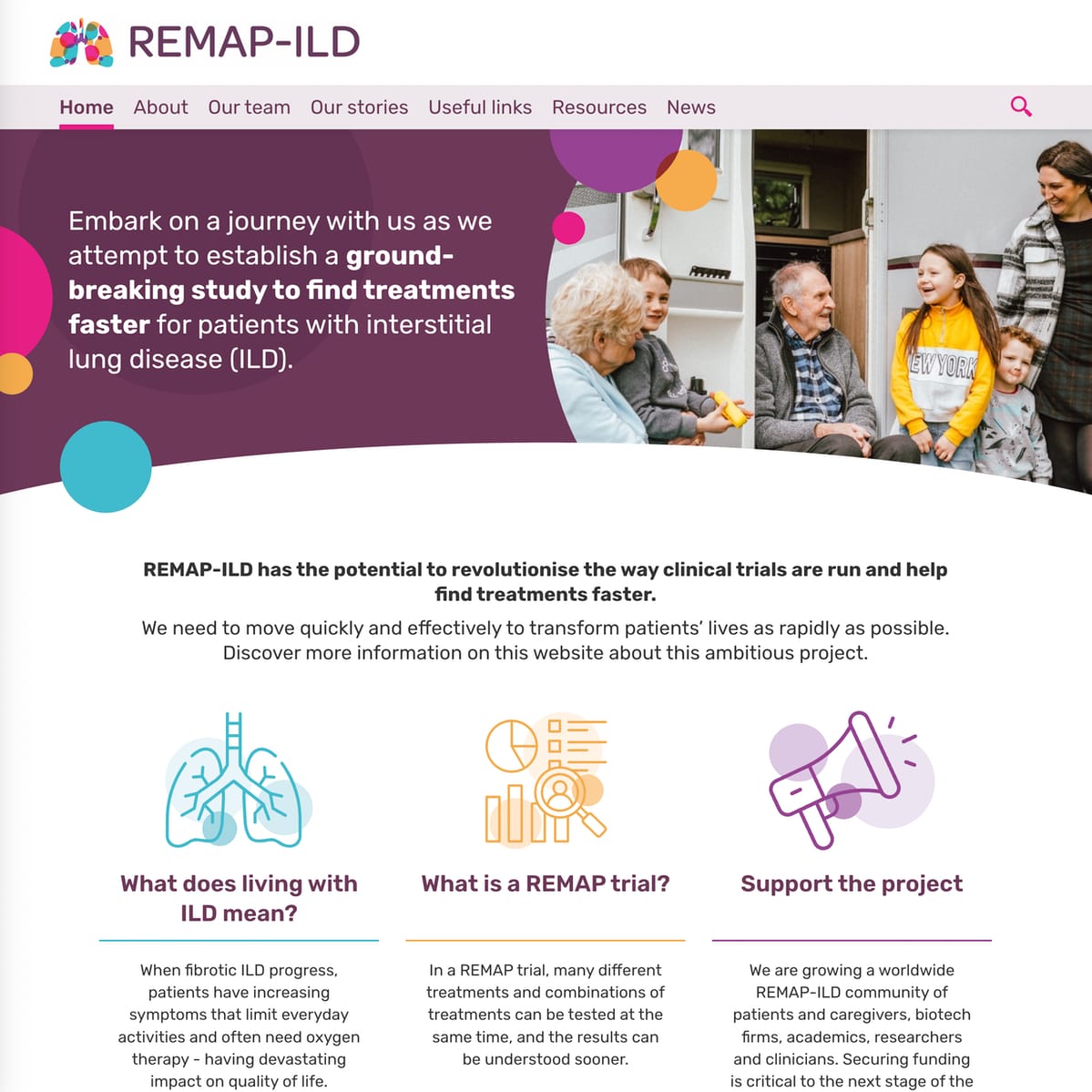
The REMAP-ILD site was built to explain the project’s goals, outline its adaptive research design, and provide clear information for patients, clinicians, and research partners.
The aim was to make a complex study accessible and easy to understand.
Visit websiteKey features
- Clear explanations of project goals, trial design and research approach
- Structured layouts for collaborators, resources and project updates
- Accessible, easy-to-read content for both specialists and the public
Tech & skills
- Bootstrap for layout grids, spacing and responsive components
- Reusable content blocks for structured pages (about, research, updates)
- CMS setup for updating trial progress and resources
- Responsive design and performance optimisation
- SEO-friendly structure to support project visibility
Framework Knitters Museum.
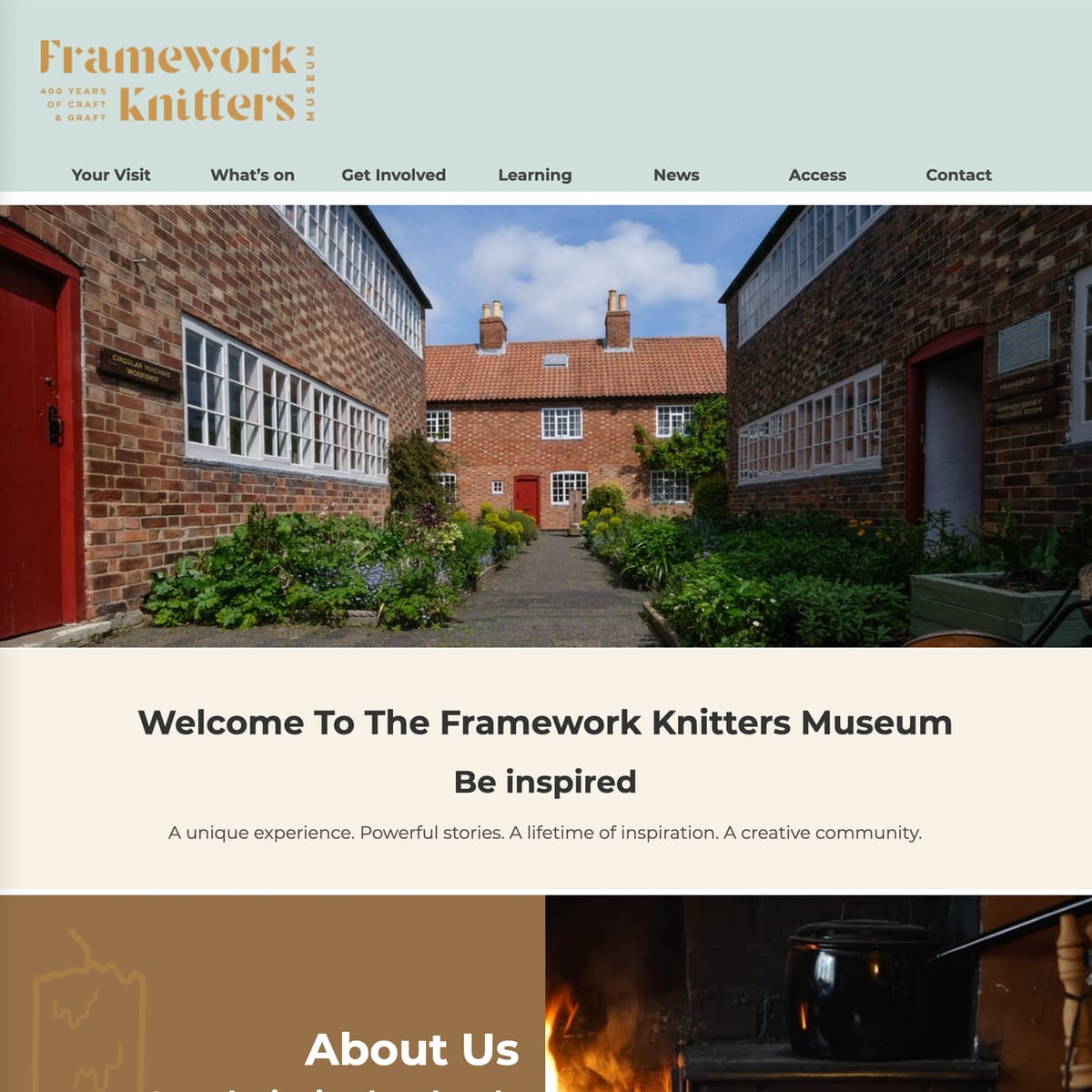
This project focused on enhancing an existing website for the Framework Knitters Museum.
The aim was to improve accessibility, streamline navigation, and make it easier for visitors to find key information while supporting the museum’s heritage and community work.
Visit websiteKey features
- Refined site navigation to help users quickly access visitor details, events, history, and learning resources
- Improved page structure and readability for a smoother user experience
- Enhanced accessibility with clearer headings, improved contrast, consistent layout, and descriptive alt text
- Updated content presentation to highlight exhibitions, workshops, and museum activities
Tech & skills
- Front-end updates within an existing codebase and CMS
- Accessibility improvements following WCAG-aligned best practices
- Navigation and UI adjustments to improve clarity and ease of use
- Image and content optimisation for better performance
- Careful iteration to enhance functionality without disrupting the original build